

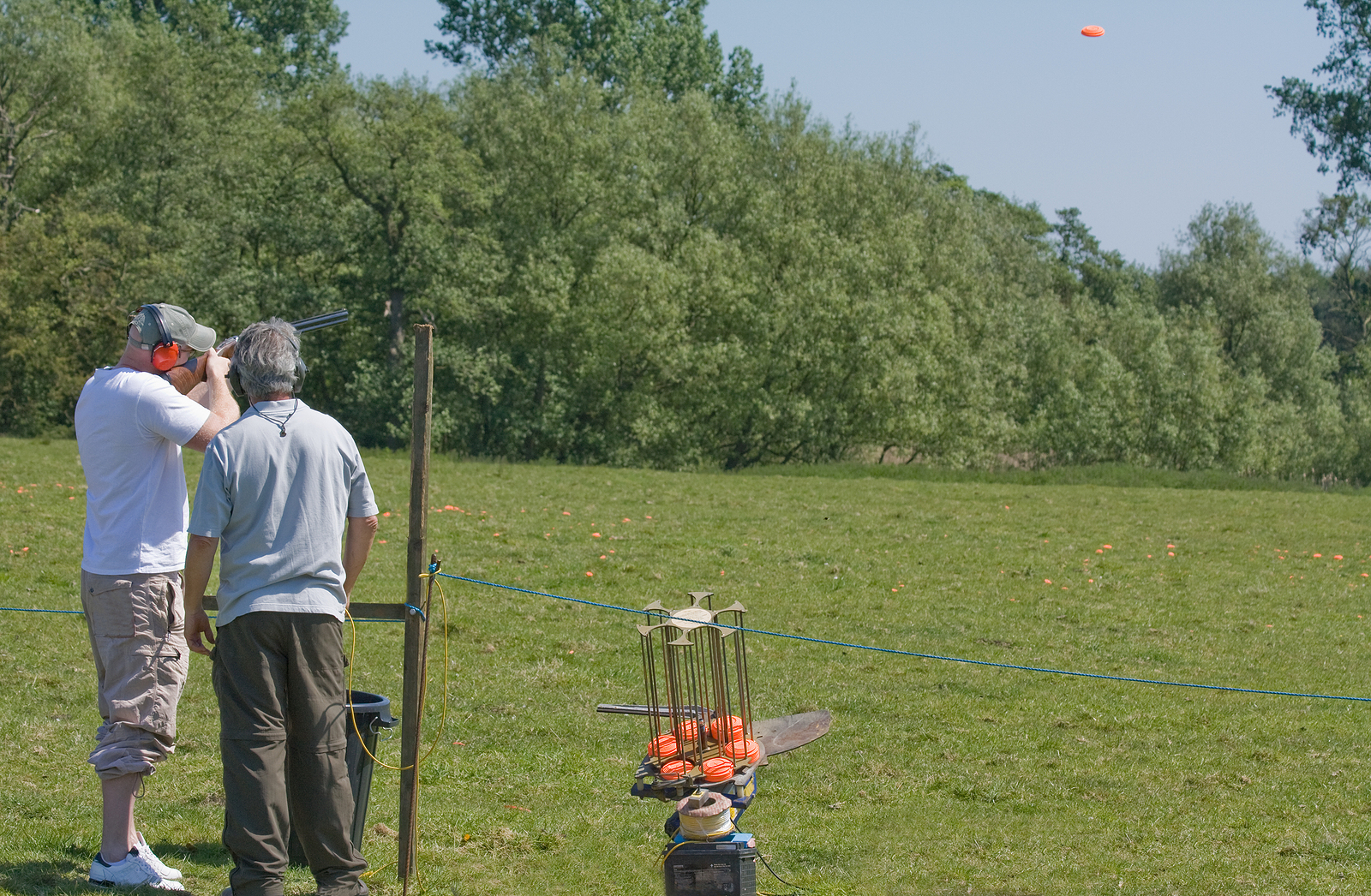
Clay Pigeon Shooting is not a sport most people enjoy regularly, but those who do are usually hooked pretty quickly. Not only is trap shooting an Olympic sport at which Britain took home a gold and silver medal from the Paris Olympics this year, but it is a pastime with a great history. What you do at a stag party or work event could spark something more.
Before having a go, you might wonder how the sport got its name – and why it’s ‘clay’ pigeons instead of real ones (if one bombed you recently you may be particularly keen to ask).
For a long time, trap shooting was a popular sport, with live birds flying out of traps when released to provide a ‘sporting’ target. The idea of using an alternative was born in the US in the 1860s when glass balls propelled from spring-loaded traps were first used.
These soon made their way to the UK and alternative materials such as pitch and clay soon came into use.
The revival of the ancient Olympics in 1896 helped raise the profile of the sport, although it did not appear until the Paris Games of 1900 and was not a permanent feature of the list of sports until 1952.
By then, the shooting of live birds had long stopped in the UK, being banned in the early 1920s. This meant clay pigeons were by now used as standard, although it was only in this decade that glass balls stopped being used.
If you are trying the sport for the first time, you may find it is loads of fun without necessarily hitting much. But, like anything else, you can improve with practice. Whether you can emulate Team GB gold medallist Nathan Hales, who won the Men’s Trap shooting in Paris, is another matter. But it will still be great fun!


Leave A Comment